

Low Porosity vs. High Porosity Hair: A Practical Porosity Care Guide
By Wellness Premium Products Editorial Team · Updated 2026-08-21
Hair porosity describes how easily hair absorbs and holds onto moisture, and it depends largely on the condition of the cuticle — the hair's outer protective layer. Low porosity hair has cuticles that lie tightly closed, so moisture and products often struggle to get in. Medium porosity hair has a more balanced cuticle structure that tends to absorb and hold moisture without much extra effort. High porosity hair has cuticles that lift or gap more easily, letting moisture in quickly but also letting it escape just as fast. This hair porosity guide breaks down what those differences tend to look like day to day, and how to build a routine around them without relying on a single test to make the call.
Key Takeaways
- Hair porosity is how readily hair absorbs and holds moisture, shaped largely by how open or closed the cuticle sits.
- Low, medium, and high porosity hair each tend to show different everyday signs, from drying time to how products sit on strands.
- A water or "float" test alone isn't a reliable diagnosis — product residue, strand diameter, and surface tension can all affect the result.
- Matching washing, conditioning, and styling habits to porosity, while watching for common mistakes, can support healthier-looking, more manageable hair over time.
What Is Hair Porosity And Why Does It Matter?
Hair porosity describes how readily a strand takes in and releases moisture, and that single trait can influence many of the product and technique choices in a hair care routine. The cuticle controls this exchange by lying flat and tight or lifting and separating. Understanding where hair likely falls on that spectrum can help turn routine-building into a more informed process rather than trial and error.
How does low porosity differ from high porosity hair?
Comparing low porosity hair care with high porosity hair care starts with cuticle behavior. Low porosity cuticles tend to lie close together and resist moisture entry, so products can sit on the surface rather than absorbing right away. High porosity cuticles tend to be more lifted or gapped, which can let moisture in relatively quickly but also let it escape just as fast, often leaving strands prone to dryness and frizz. Medium porosity hair care generally addresses a pattern that sits between these two extremes, absorbing and holding moisture with fewer adjustments needed.
| Porosity Type | Typical Cuticle Pattern | Common Concern |
|---|---|---|
| Low | Cuticles lie tightly closed | Product sitting on the surface, buildup |
| Medium | Cuticles lie moderately open | Fewer extremes, but still needs consistent care |
| High | Cuticles lift or gap more easily | Rapid moisture loss, dryness, frizz |
What does a client need before starting a porosity-based routine?
Building a hair porosity routine starts with a few essentials rather than a long list of products. Wellness Premium Products formulates with organic cold-pressed hemp seed oil and a micro-capsule delivery system designed to help active ingredients reach the hair shaft rather than simply coat the surface. Starting from a general understanding of porosity, instead of assuming one routine fits every hair type, is a reasonable first step before narrowing down specific products.
- Look at practical, everyday signs of porosity — how fast hair dries, how quickly products absorb, and how soon buildup appears — rather than relying on a single test alone.
- Consider a leave-in conditioner for hair porosity needs, such as one formulated with hemp seed oil, to help support moisture retention between washes.
- Introduce one new product at a time and observe results over a few weeks before adding another.

How Do You Identify Your Hair Porosity Type?
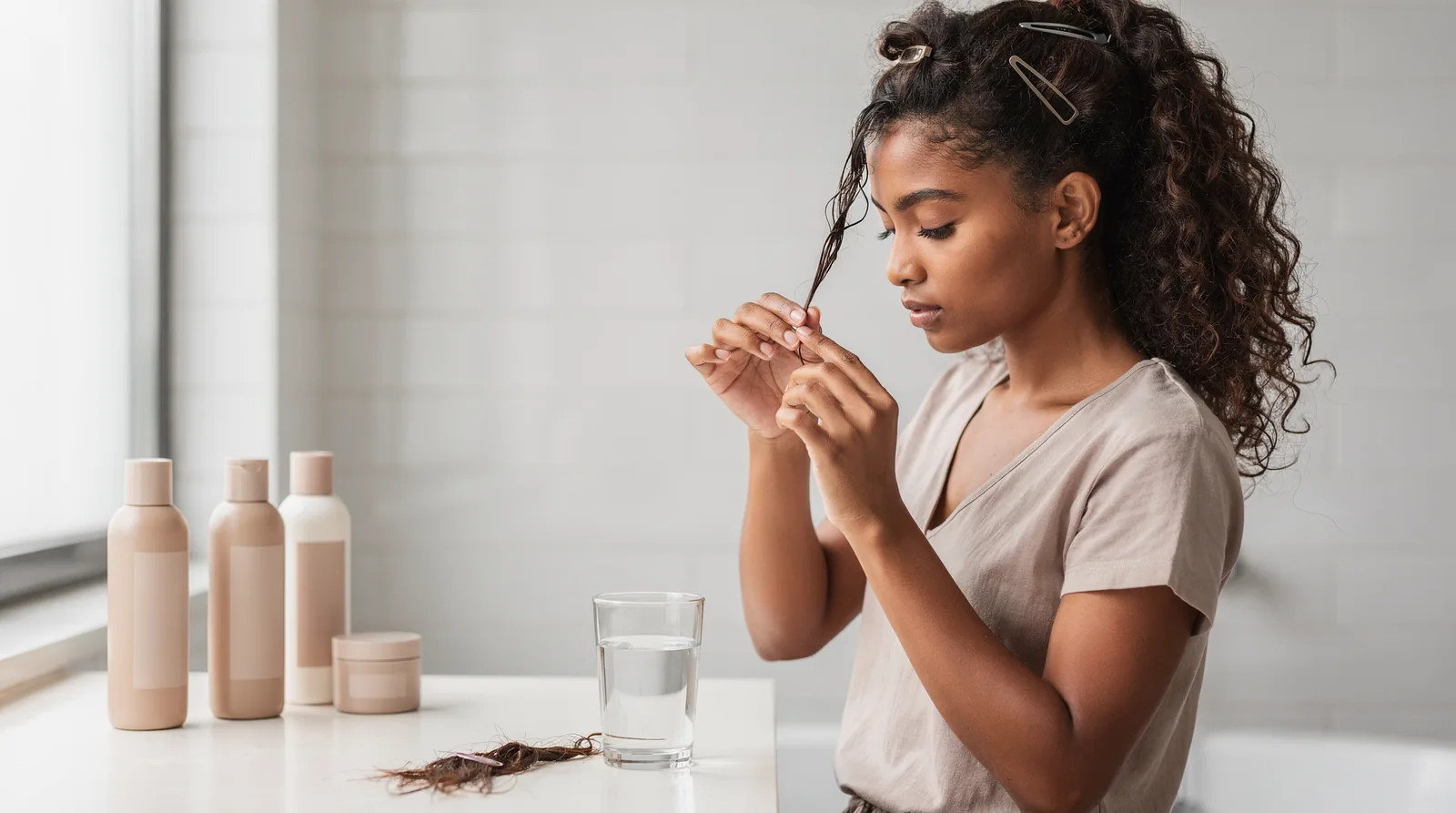
A water, or "float," test is a commonly cited way to get a rough sense of cuticle behavior, but on its own it isn't a reliable or definitive diagnosis. Product residue left on a strand, natural differences in strand diameter, and simple surface tension in the glass can all affect whether a strand floats or sinks, regardless of actual porosity. Because of that, it's worth treating a float test as one data point among several rather than a final answer.
If you want to try it, here's the general idea:
- Collect one clean, shed hair strand from a brush or comb — ideally one that hasn't been recently styled with product.
- Drop the strand into a glass of room-temperature water.
- Wait a few minutes without disturbing the glass.
- Note the strand's position, keeping in mind that floating or sinking is only a rough indicator, not a confirmed result.
More reliable everyday signs of porosity
Because the float test has real limitations, many stylists and at-home users find it more useful to watch how hair behaves during normal washing and styling. A few patterns worth noticing:
- Drying time. Hair that takes a long time to air-dry may point toward low porosity, since moisture struggles to escape a tightly closed cuticle. Hair that dries very quickly may point toward high porosity, since moisture escapes easily.
- Product absorption. Low porosity hair often shows product sitting on top of strands or rolling off rather than absorbing. High porosity hair tends to absorb product almost immediately, sometimes needing more of it to feel adequately moisturized.
- Buildup. Low porosity hair is more prone to visible product buildup over time, since less product penetrates the cuticle. High porosity hair usually shows less buildup but more frequent dryness.
- Overall texture and behavior. High porosity hair may feel rougher and appear more prone to tangling or frizz, especially in humidity, while low porosity hair may feel smoother but look weighed down by richer products.
- Professional assessment. A stylist can often assess porosity more reliably in person by examining texture, elasticity, and how hair responds to handling, which is especially useful for color-treated or chemically processed hair, where a water test is even less reliable.
No single sign is conclusive on its own, so it helps to look at these observations together over a few wash cycles rather than relying on any one test or moment.
Why does cuticle behavior matter for a routine?
Cuticle openness affects how quickly moisture and treatments can penetrate the hair shaft. Hair that shows signs of low porosity may respond well to gentle heat, such as a warm towel or steam, to help the cuticle lift slightly before a mask or conditioner is applied. Hair that shows signs of high porosity may benefit from more frequent, lighter protein care to help temporarily smooth and seal the cuticle. Because hair is made largely of a protein called keratin, protein plays a role in strength, while moisture balance plays a bigger role in softness and curl definition.
How Do You Build A Routine For Each Porosity Type?
Once you have a general sense of where hair likely falls, the next step is matching everyday habits and products to that pattern. Genetics play a role in low porosity hair care versus high porosity hair care, but daily habits, coloring, and heat styling can shift porosity over time, so routines may need to change as hair changes.
Low porosity hair care
Low porosity hair tends to resist moisture at first but can hold onto it once it gets in, so the goal is usually opening the cuticle gently and avoiding heavy buildup.
- Washing: A clarifying or lightweight shampoo every one to two weeks can help prevent buildup, which tends to show up more easily on low porosity strands.
- Conditioning: Apply conditioner to damp, warm hair, and consider a warm towel or gentle heat so the cuticle can open slightly and let product absorb rather than sit on top.
- Masks: Lighter, water-based masks tend to absorb more readily than very rich, oil-heavy formulas; leaving a mask on with gentle heat may improve absorption.
- Leave-ins and serums: A lightweight leave-in conditioner for hair porosity needs, applied to damp hair, can help without adding extra weight. A small amount of hair repair serum on the ends can help manage texture without contributing to buildup.
- Heat: Occasional gentle heat during conditioning can help products absorb, but excess heat styling can still cause damage over time, so moderation matters.
- Protein caution: Low porosity hair usually needs less added protein, since the cuticle already resists penetration; frequent, heavy protein treatments can leave hair feeling stiff or straw-like.
- Common mistakes: Layering on too many heavy products, skipping clarifying washes, and assuming more product will fix dryness when it's actually causing buildup.
Medium porosity hair care
Medium porosity hair usually starts from the most balanced point, absorbing and holding moisture reasonably well, so the focus is on maintaining that balance rather than correcting an extreme.
- Washing: A regular, gentle shampoo routine — roughly every few days depending on hair type and activity level — generally works well.
- Conditioning: A standard rinse-out conditioner after each wash typically keeps medium porosity hair balanced without extra steps.
- Masks: A hydrating or lightly reparative mask every one to two weeks can help maintain condition, especially after heat styling or color services.
- Leave-ins and serums: A leave-in conditioner and a light hair repair serum can support shine and manageability, though they may not be strictly necessary at every wash.
- Heat: Medium porosity hair generally tolerates moderate heat styling reasonably well, though a heat protectant is still a sensible precaution.
- Protein caution: An occasional protein treatment, rather than a frequent one, can help maintain strength, particularly after chemical services.
- Common mistakes: Assuming this hair type needs no attention at all, or over-styling without adjusting the routine as color or heat exposure accumulates.
High porosity hair care
High porosity hair tends to take in moisture quickly but lose it just as fast, so the focus is usually on sealing moisture in and supporting strength.
- Washing: A gentle, moisturizing shampoo, and stretching washes slightly further apart where possible, can help avoid stripping moisture this hair type struggles to hold onto.
- Conditioning: A rich, moisturizing conditioner left on for a few extra minutes can give strands more time to absorb before rinsing.
- Masks: Deep-conditioning or hydrating masks used weekly, or more often for very damaged or chemically treated hair, can help address the rapid moisture loss common with this porosity type.
- Leave-ins and serums: A leave-in conditioner formulated for higher porosity needs, followed by a sealing hair repair serum or a small amount of oil, can help lock in moisture after washing.
- Heat: Because high porosity hair is often already more fragile, minimizing heat styling and consistently using a heat protectant is worth prioritizing.
- Protein caution: High porosity hair often benefits from more consistent, moderate protein care to help temporarily smooth and strengthen the cuticle, but overdoing protein can cause its own dryness and brittleness — balancing it with moisture-focused products matters.
- Common mistakes: Skipping sealing products after conditioning, over-processing with color or heat without added reparative care, and assuming more frequent washing will solve dryness rather than adding to it.
How often should a porosity routine change?
Porosity-based routines may need to shift whenever hair goes through a new chemical service, a significant heat-styling change, or a shift in season or climate. Salon treatments and daily styling tools can alter how the cuticle behaves over time, so a routine that worked well months ago may no longer fit hair's current condition. Reassessing porosity signs after major changes can help keep a routine relevant and effective.
FAQ
What is hair porosity?
Hair porosity is a general term for how readily hair absorbs and retains moisture, largely influenced by how open or closed the cuticle layer sits. It's typically described as low, medium, or high, though hair can show a mix of these patterns.
Is the water or float test a reliable way to check porosity?
Not on its own. A float test is a common starting point, but product residue, strand diameter, and surface tension in the water can all affect the result. It tends to be more useful combined with everyday observations — like drying time, product absorption, and buildup — or a professional assessment from a stylist.
What are signs of low porosity hair?
Low porosity hair often takes longer to dry, tends to show product sitting on top of strands rather than absorbing quickly, and can be more prone to visible buildup over time.
What are signs of high porosity hair?
High porosity hair often dries quickly, absorbs product fast, and can feel rougher or more prone to frizz and tangling, especially in humid conditions.
Can hair porosity change over time?
Yes. While genetics play a role, chemical treatments, heat styling, and general wear on the hair can all affect how the cuticle behaves, which is why it's worth reassessing a routine periodically rather than treating it as fixed.
What products can help with hair porosity?
A leave-in conditioner suited to hair porosity needs, along with a lighter or richer hair repair serum depending on porosity type, can support a routine. Wellness Premium Products formulates its hemp seed oil hair care line with organic cold-pressed hemp seed oil and micro-capsule technology designed to help ingredients reach the hair shaft rather than sit on the surface.
Conclusion
Understanding where hair likely falls on the porosity spectrum can help guide more informed choices about washing, conditioning, and styling. Because a single water test has real limitations, it helps to look at practical signs together — drying time, product absorption, buildup, and, where possible, a professional assessment — rather than relying on any one method or moment. Whether hair leans low, medium, or high porosity, matching a routine's washing frequency, conditioning approach, and protein-to-moisture balance to that pattern is a reasonable way to work toward healthier-looking, more manageable hair over time.
For hemp seed oil hair care by porosity type, Wellness Premium Products offers shampoos, conditioners, masks, leave-in conditioners, and hair repair serums built with organic cold-pressed hemp seed oil and micro-capsule technology. Reach the team directly at hello@wellnesspremiumproducts.com for personalized product guidance.
Share:
Hair Serum vs Leave-In Conditioner: Which Works Best
The Ultimate Heat Protectant for Blow Drying Guide