

The Ultimate Heat Protectant for Blow Drying Guide
By Wellness Premium Products Editorial Team · Updated 2026-08-21
A step by step blowout routine built around heat protection hair care starts well before a blow dryer ever powers on. Toweled, detangled hair, a protectant applied to damp strands, and thoughtful sectioning all work together to help reduce heat-related stress on hair during styling. Wellness Premium Products' hemp seed oil-infused formulas are designed to support hydration and manageability as part of an at home blowout guide — though no product can eliminate the risk of heat damage entirely. Technique matters just as much as the products used.
Key Takeaways
- A heat protectant applied before blow drying can help reduce heat-related stress on hair, though it cannot prevent all damage — technique and tool settings still matter.
- A step by step blowout routine — from towel drying through sectioning to a finishing serum — supports smoother, more manageable results at home.
- Hair does not need to be freshly shampooed before every blow-dry; how often to cleanse depends on hair type, scalp condition, and personal routine.
- Excess heat, incorrect dryer distance, or skipping protectant can all contribute to dryness, frizz, and reduced shine over time.
- Wellness Premium Products offers hemp seed oil-based formulas designed to support strength and hydration as part of a heat protection hair care routine.
What Do You Need Before Blow-Drying?
Preparation shapes the outcome of a blowout long before heat is involved. Blow drying carries some inherent risk of strand stress, and skipping the setup stage can raise that risk. A short prerequisite routine helps keep hair as strong and hydrated as possible going into styling.
Does hair need to be freshly washed before every blow-dry?
Not necessarily. How often hair is shampooed depends on hair type, scalp oil production, and personal preference — many people blow-dry second-day or third-day hair, sometimes refreshed with a light mist of water or a dry shampoo at the roots. When hair is cleansed, using a shampoo and conditioner suited to strand type and scalp needs supports better results than daily washing on its own would.
How should hair be towel-dried before styling?
Once hair is wet or freshly conditioned, gentle towel drying sets the stage for a smoother blow-dry. Blotting or gently squeezing sections of hair with a microfiber towel or soft cotton t-shirt removes excess water without roughing up the cuticle the way vigorous rubbing can. Hair should feel damp, not dripping, before any protectant or styling product is applied — too much water dilutes product and extends drying time, which means more heat exposure overall.
What products help protect hair before a blowout?
A quality heat protectant for blow drying should top the list. It's designed to create a barrier between hair and hot air, which can help reduce — though not eliminate — the stress heat places on strands. Beyond that barrier product, a short routine tends to work well:
- Cleanse hair when needed, using formulas suited to strand type and scalp condition rather than washing on a fixed daily schedule.
- Towel-dry gently by blotting until hair is damp rather than soaking wet.
- Apply a leave-in treatment if hair tends to run dry or feels depleted.
- Distribute a heat protectant evenly from mid-lengths to ends, and through roots if desired.
- Section hair before drying begins for more even airflow and coverage.
Why do protein and moisture balance matter before styling?
Hair strands are made mostly of a protein called keratin, so a strand's resilience under heat is connected to its underlying protein condition. Softness and manageability, by contrast, come more from moisture balance. Wellness Premium Products formulates with both needs in mind, offering options intended to support strength and hydration together rather than treating them as separate concerns.
Skipping this balance can leave hair more prone to trouble. Heat exposure without any protective step may contribute to volume loss, duller color, and split ends over time, though the extent varies by hair type, condition, and how heat is applied. Choosing among the best products for at home blowout results generally means selecting formulas that support strength where strands feel weak and add moisture where hair feels dry — a foundational step in learning how to protect hair from heat damage before styling tools ever touch the hair.
How Hot Should a Blow Dryer Be?
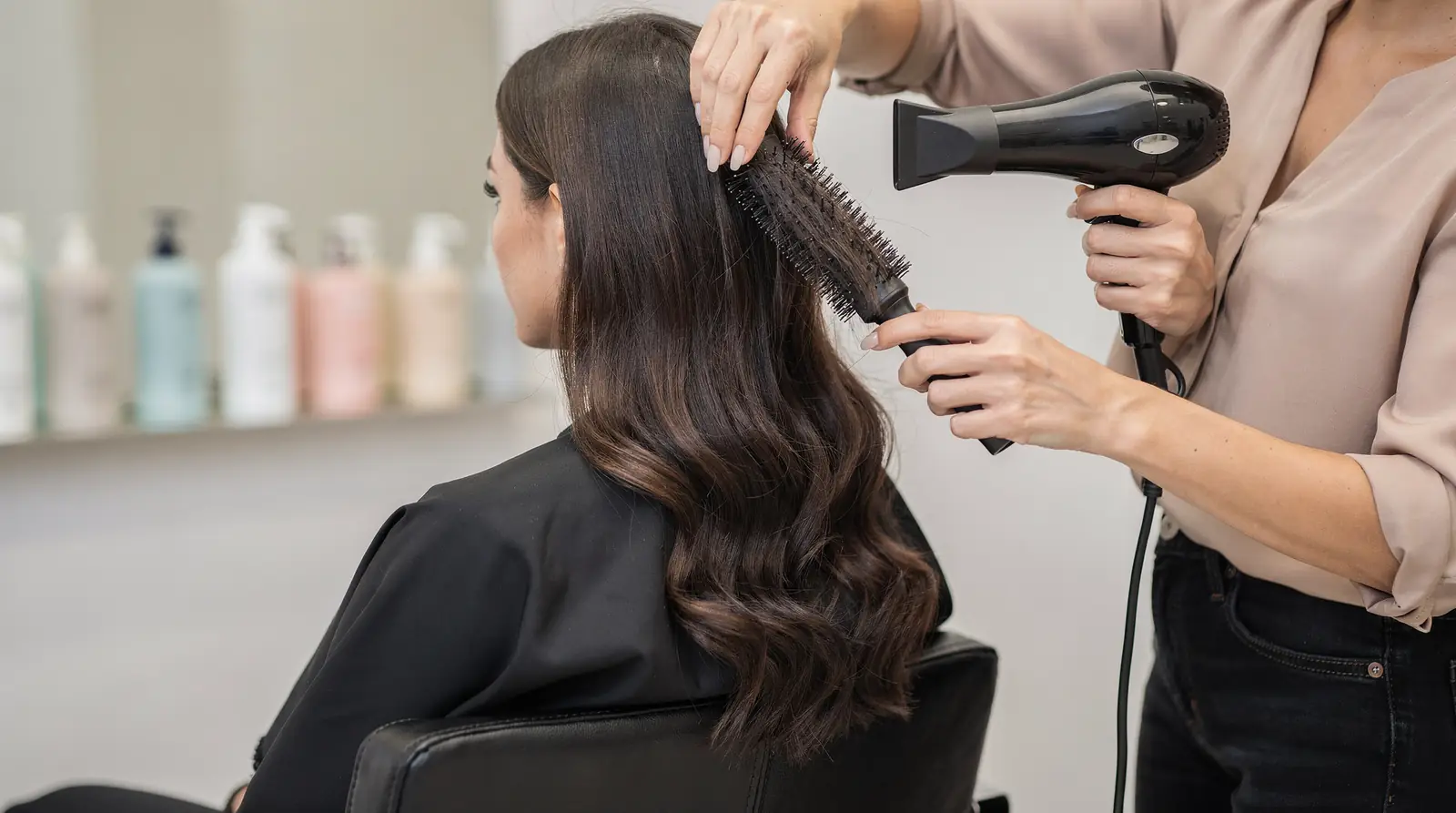
Heat protectant works best when it's paired with a temperature setting appropriate to hair type and condition, since even protected strands can be stressed by excessive, prolonged heat.
- Fine or fragile hair generally does better on a lower or medium heat setting paired with strong airflow, letting air speed do more of the work than heat.
- Thick or coarse hair may need a medium to medium-high setting to dry efficiently, but the dryer should still stay in motion rather than resting on one section.
- Color-treated, chemically processed, or previously damaged hair tends to be more porous and heat-sensitive, so a lower setting and slower, more careful passes are generally the safer choice.
- Finishing on the cool-shot setting, where available, can help hair feel smoother to the touch and look shinier as it sets — though a cool shot does not permanently lock the cuticle or guarantee that a style holds; it simply gives the hair a moment to cool before it's touched or brushed further.
How Far Should the Dryer Be From Hair, and Which Way Should Airflow Point?
Distance and direction matter as much as temperature. Holding the dryer roughly four to six inches from hair, and keeping it moving continuously, helps distribute heat rather than concentrating it on one spot. A nozzle attachment, angled to direct airflow down the hair shaft from root to end, helps smooth the outer layer of each strand and can reduce frizz compared to blasting air in a random or upward direction. Pointing airflow away from the scalp, rather than directly at it, also helps avoid unnecessary heat concentration close to the skin.
How Should Hair Be Sectioned, and Which Brush Works Best?
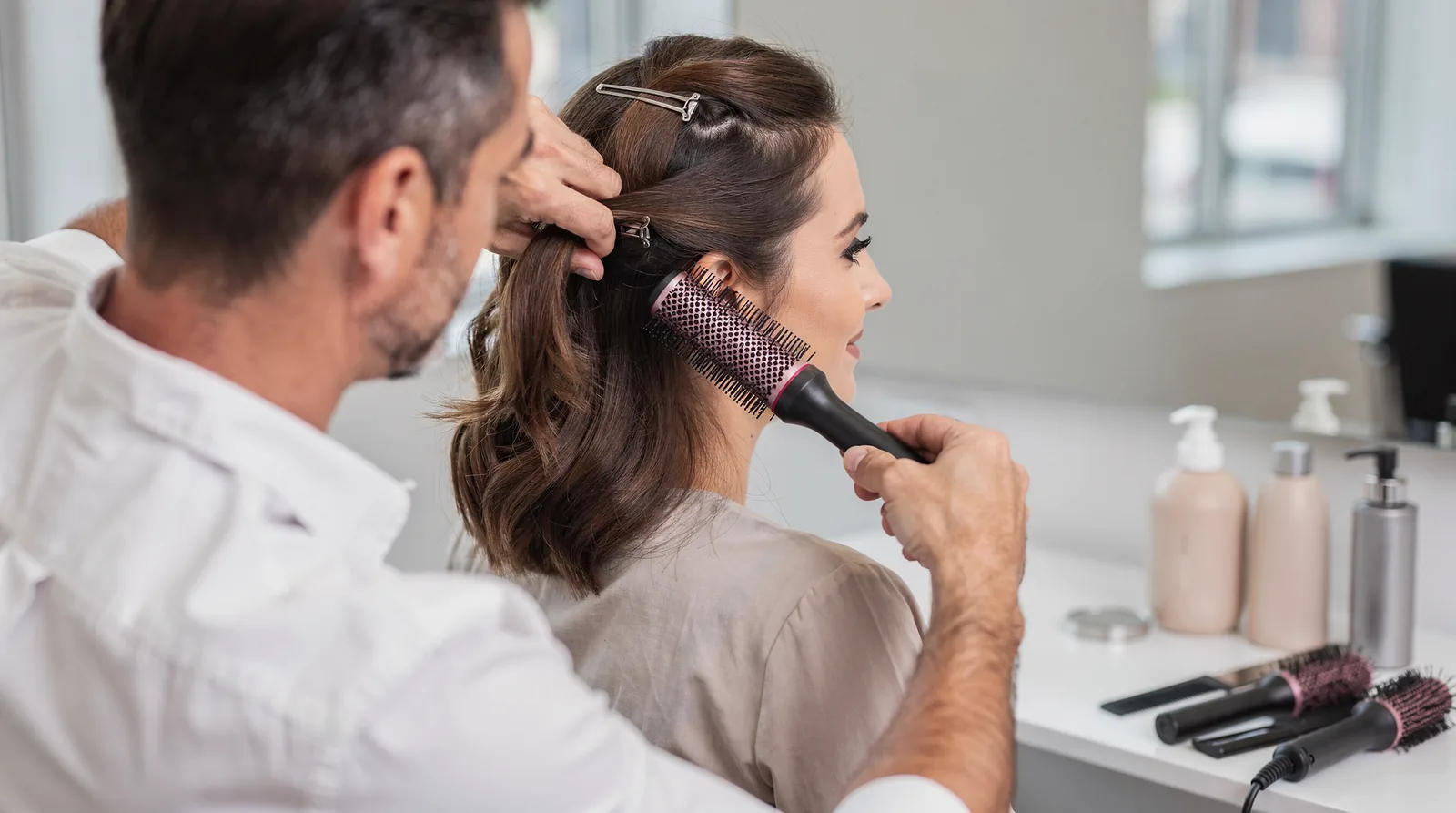
Sectioning hair into four to six manageable pieces — the exact number depends on thickness and length — allows the dryer and brush to reach each area evenly instead of repeatedly passing over already-dry sections. Working section by section, from the back of the head toward the front, also helps keep drying time efficient.
Brush choice affects both the result and how much heat is needed to achieve it. A larger barrel round brush tends to smooth hair and add gentle volume with fewer passes, while a smaller barrel is often better suited to defining curls, waves, or shorter lengths. A boar-bristle or boar-and-nylon blend brush can help distribute natural oils and add shine while smoothing the cuticle. Matching brush size to hair length and desired result can reduce the number of passes needed, which in turn limits total heat exposure.
What Are the Signs of Excessive Heat During a Blowout?
Hair can signal when it's getting more heat than it should. Watching for these signs helps prevent avoidable stress on strands:
- A sizzling sound while the dryer or a hot brush passes over hair, which can indicate the setting is too high for that section.
- Hair that feels unusually dry, brittle, or rough to the touch immediately after a pass, rather than smooth.
- Visible steam beyond the normal light vapor of early drying, especially on sections that were already mostly dry.
- Increased static, frizz, or flyaways appearing mid-routine rather than easing as hair dries.
- For lightened or color-treated hair, any change in tone or an increase in breakage during styling.
If any of these appear, lowering the heat setting, increasing the distance from hair, slowing down the pass, or switching to a diffuser or cool-shot finish can help limit further stress.
How Do You Troubleshoot Common Blowout Mistakes?
Tugging, tangling, and tired arms usually signal a routine that needs adjustment, not a lost cause. These frustrations tend to trace back to technique or product mismatch rather than the hair itself. Fixing the pattern starts with identifying which stage of the blowout is causing resistance.
- Check section size first; smaller sections generally reduce pulling and tangling during brushing.
- Reassess product layering; too much styling product can weigh hair down and cause drag mid-blowout.
- Match the formula to the specific hair concern instead of relying on one product for every need.
Why does blonde or lightened hair often feel extra dry after blow drying?
Repeated heat exposure can strip moisture and dull tone more noticeably in lightened strands, since the lightening process tends to leave hair more porous. Wellness Premium Products' Platinum Collection is formulated for blonde, gray, silver, or white hair and is designed to support easier maintenance between salon visits, though results vary with hair condition and overall heat habits.
Curl pattern loosening or frizzing after drying often points to a hydration gap rather than a technique problem alone. The brand's Deep Hydration Collection offers a plant-based option formulated for curly, coily, thick, or unmanageable hair, designed to support definition without weighing curls down.
What Finishing Products Help With a Smooth Blowout?
Once the blow-dry itself is finished, a light layer of the right finishing product can make a visible difference. A finishing hair serum, particularly one infused with hemp seed oil, is designed to smooth the hair's outer layer and add a lightweight sheen once styling is complete. Smoothing blowout products applied sparingly to mid-lengths and ends — rather than the scalp — can help reduce the look of frizz and flyaways without leaving hair feeling weighed down or greasy. A small amount worked through with fingertips or a brush typically goes further than a heavy application, and product amount can be adjusted for hair length and thickness.
What Is a Step-by-Step At-Home Blowout Routine?
Bringing each stage together, a step by step blowout routine generally follows this order:
- Cleanse hair if needed; daily shampooing isn't necessary for every hair type, so build this step around personal routine and scalp condition.
- Condition mid-lengths and ends, or throughout the length of hair, depending on hair type and scalp needs — conditioner placement isn't one-size-fits-all.
- Smooth in a hydrating treatment, such as an option from the brand's Deep Hydration Collection, for curly, coily, thick, or unmanageable textures.
- Towel-dry gently by blotting until hair is damp, not dripping.
- Apply a heat protectant for blow drying evenly through mid-lengths and ends, and through roots if desired.
- Section hair into four to six pieces, depending on thickness and length.
- Choose a brush sized to the goal — a larger barrel for smoothness and volume, a smaller barrel for curl or wave definition.
- Dry from roots to ends, holding the dryer several inches from hair and angling airflow down the hair shaft.
- Keep the dryer moving continuously, watching for signs of excessive heat such as sizzling or sudden dryness, and adjust the setting or distance as needed.
- Finish each section with the dryer's cool-shot setting if available, which can help hair feel smoother and look shinier as it sets.
- Apply a small amount of finishing hair serum to mid-lengths and ends for added smoothness and shine.
FAQ
Can a heat protectant fully prevent heat damage?
No product can guarantee complete protection from heat damage. A heat protectant is designed to help reduce heat-related stress on hair by forming a barrier between strands and hot air, but excessive heat, high settings, or repeated exposure can still affect hair over time. Pairing a protectant with an appropriate temperature and good technique offers more reliable results than the product alone.
Do I need to shampoo my hair every time before blow-drying?
No. Whether to shampoo before a blow-dry depends on hair type, scalp oil production, and personal preference. Many people blow-dry hair that's a day or two past its last wash, sometimes refreshing the roots with a light mist of water or dry shampoo first.
Where should conditioner be applied before a blowout?
Conditioner placement depends on individual hair and scalp needs. Some people apply conditioner mainly to mid-lengths and ends to avoid weighing down the scalp, while others with drier scalps or coarser hair may condition closer to the roots. There isn't one placement that works for everyone.
Does the cool-shot setting lock in a blowout permanently?
Not permanently. A cool shot can help hair feel smoother and look shinier as it sets by giving strands a moment to cool down, but it doesn't seal the cuticle shut or guarantee the style will hold indefinitely — humidity, touch, and hair type all still affect how long a blowout lasts.
How can I tell if my blow dryer is too hot for my hair?
Signs of excessive heat include a sizzling sound, hair that feels brittle or unusually dry right after a pass, more frizz appearing mid-routine, and — for lightened hair — any shift in tone. If these appear, lowering the heat, increasing the distance from hair, or slowing down the pass can help.
Conclusion
A thoughtful blowout routine, built around preparation, an appropriate heat protectant, sensible temperature choices, and a finishing product suited to hair type, can help support smoother, more manageable results at home while helping reduce unnecessary heat-related stress on hair. No routine can promise damage-proof styling, but consistent, careful technique — paired with formulas like Wellness Premium Products' hemp seed oil-based options — gives hair a better foundation to work with each time the dryer comes out.
Ready to Build Your Heat Protection Routine?
Explore Wellness Premium Products' hemp seed oil-infused formulas, including the Deep Hydration and Platinum Collections, at wellnesspremiumproducts.com. For product questions or help choosing the right routine for your hair type, reach the team at hello@wellnesspremiumproducts.com or 424 443 9966.
Share:
Low Porosity vs. High Porosity Hair: A Practical Porosity Care Guide